
Gen Z's biggest fear is laughable at first. But it's quietly wreaking havoc on their lives.
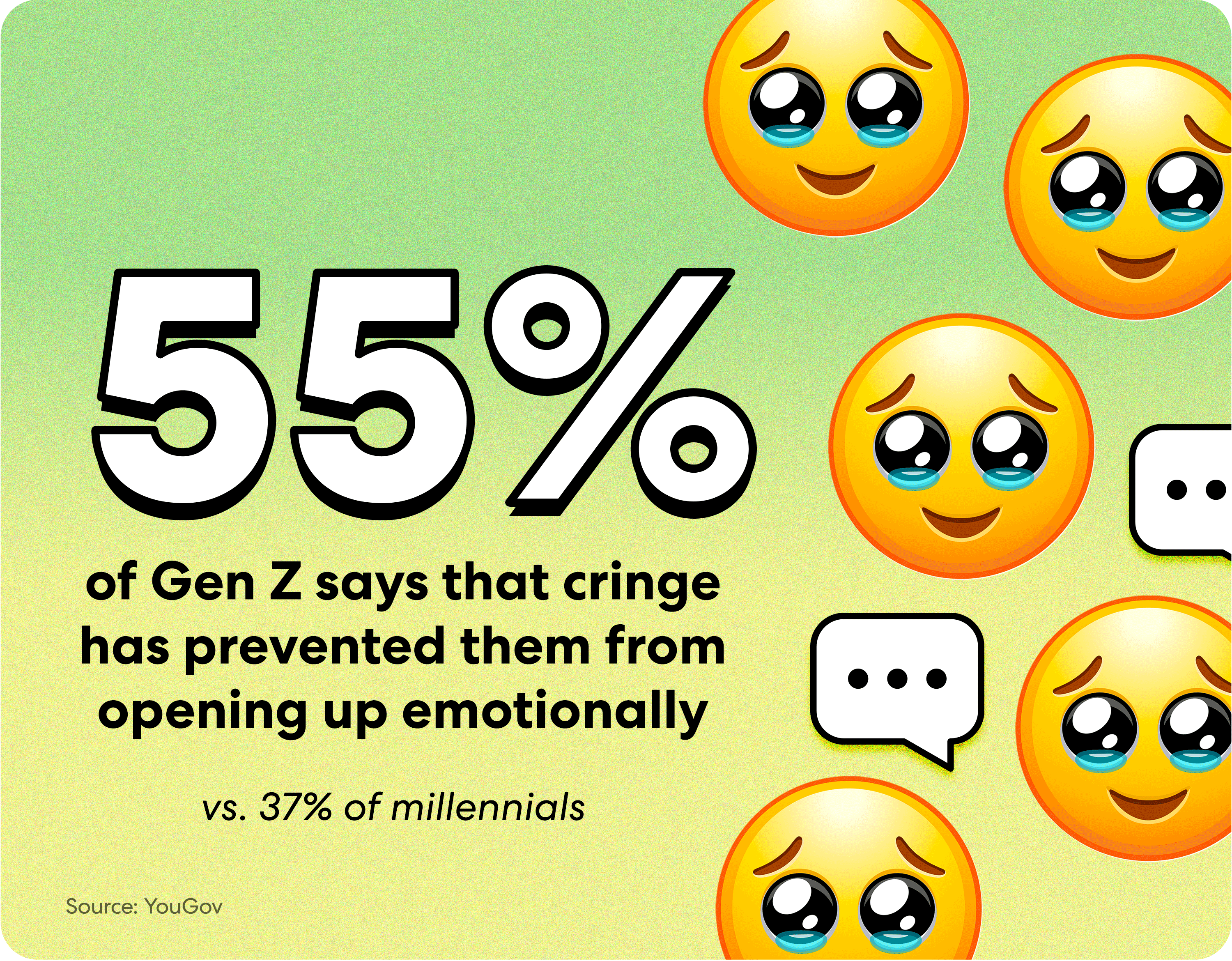
More than 50% of Gen Z-ers say anxiety about being cringe has prevented them from opening up emotionally. How did a reign of self-censorship come to define young Americans?

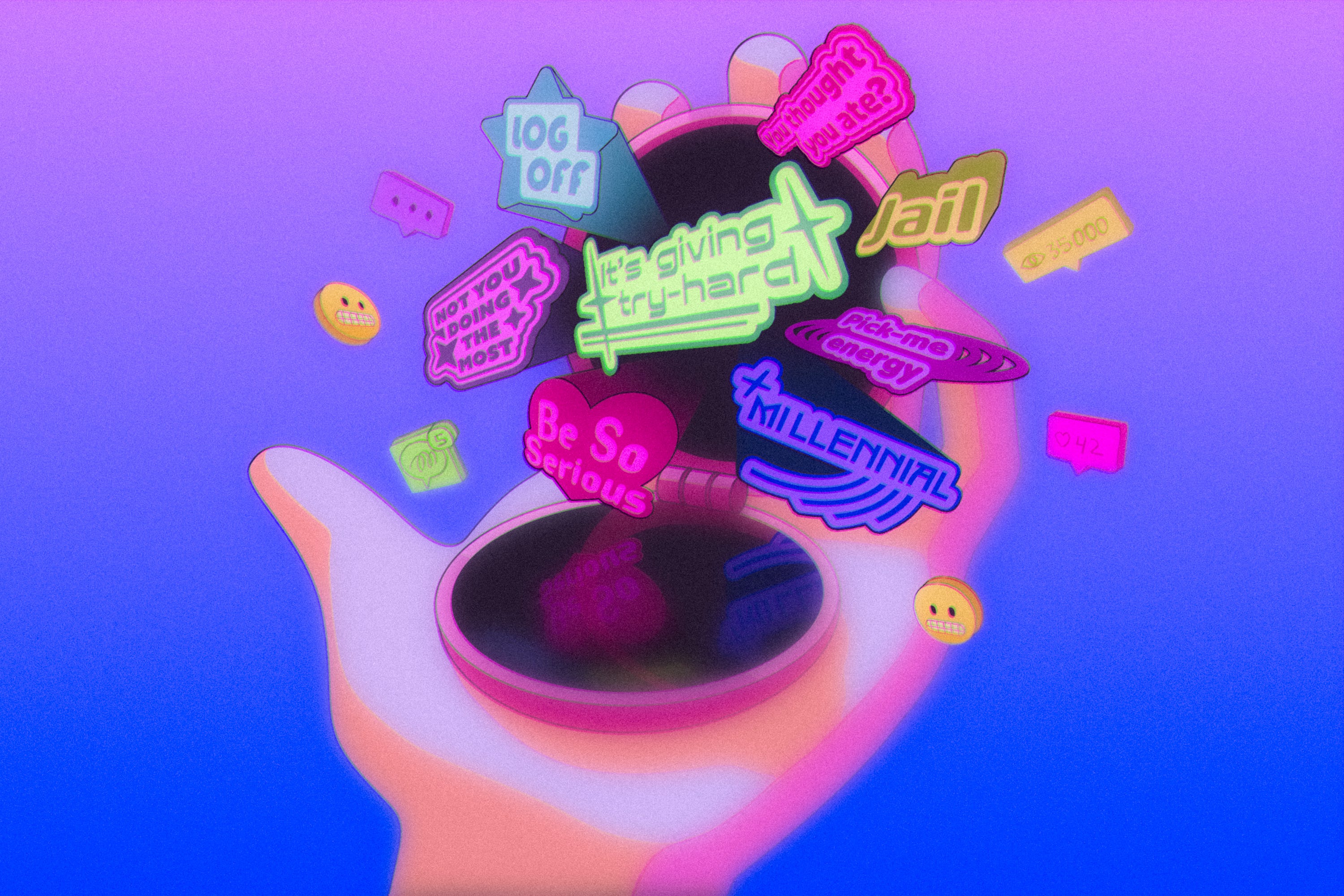
(The photo illustrations in this post are from Nahuel Bardi for Yahoo News)
If you’ve ever read a trend piece about something that Gen Z finds cringe and thought, “Hmmm, that sounds unpleasant!” — you are right. Cringe has become a pervasive, deeply unpleasant feeling that has pervaded every aspect of the lives of young adults.
I spent weeks talking to 18-to-29-year-olds to understand what it is, where it came from, how it impacts them on a daily basis and how they work around it. It’s sad, scary and, at times, strangely hopeful.
This is my big one. Read the whole thing on Yahoo.
Here’s a nonexhaustive list of things Gen Z finds cringe: drinking, getting a driver’s license, having a boyfriend, going out, not going out, using the wrong emojis, using the wrong slang, parting your hair the wrong way, wearing the wrong jeans. It’s cringe to try and it’s cringe not to try hard enough.
It’s easy to dismiss Gen Z’s particular aversion to cringe as kind of silly — finding things embarrassing is a rite of passage for young people and always has been — but cringe is so much more than a fleeting reaction or a punch line for generational mockery. It’s become the trait that most defines and unites Gen Z-ers, who are now between the ages of 14 and 29.
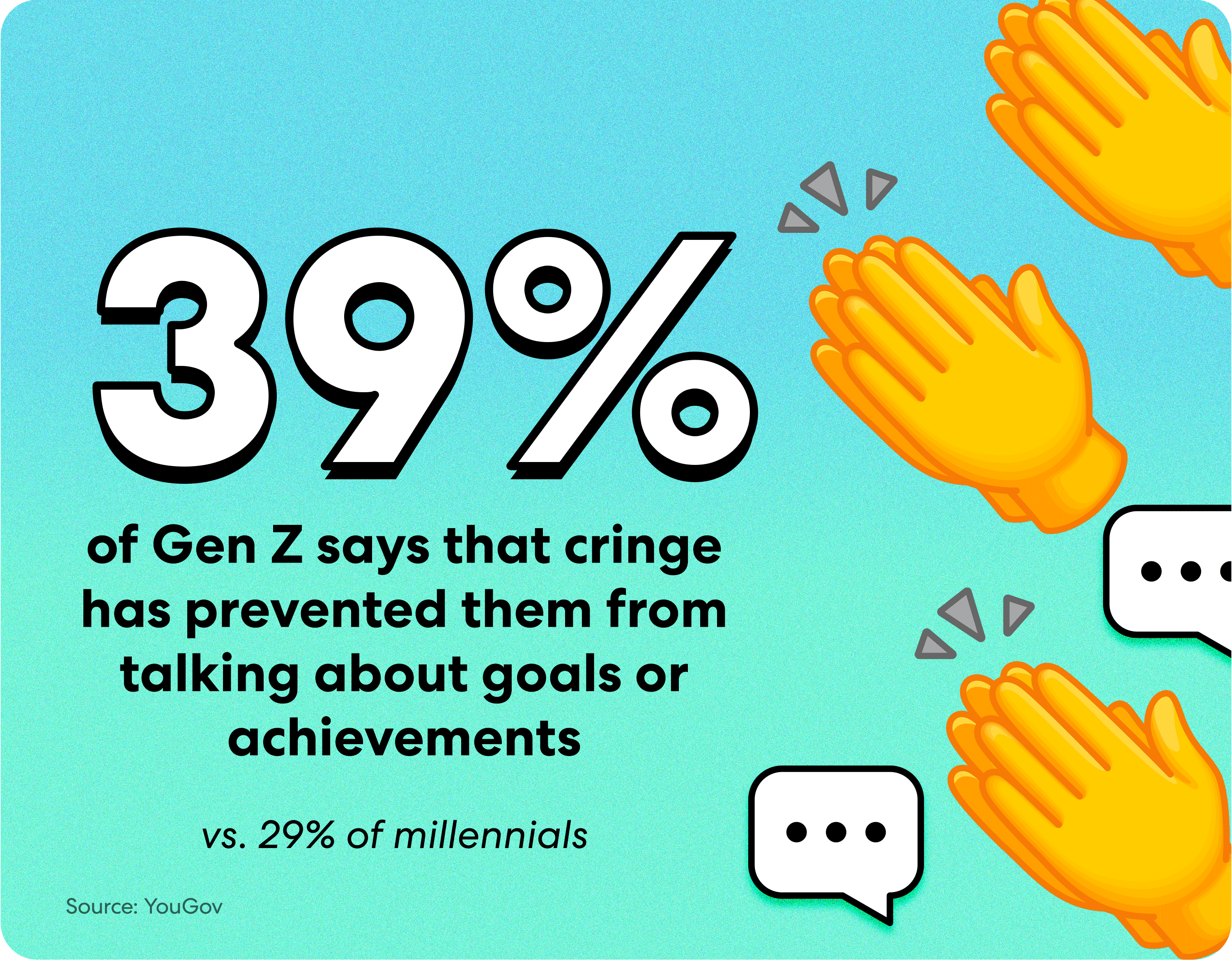
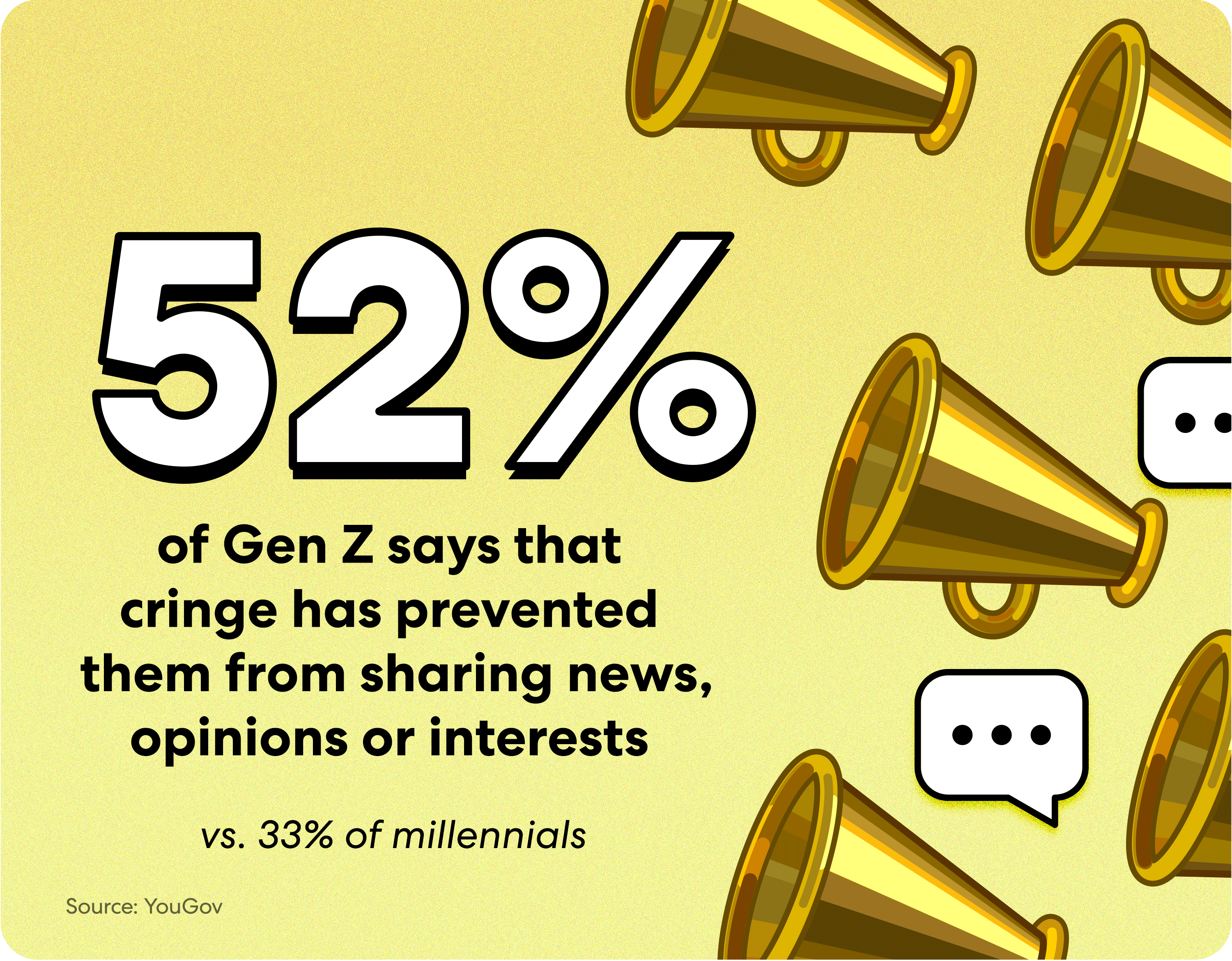
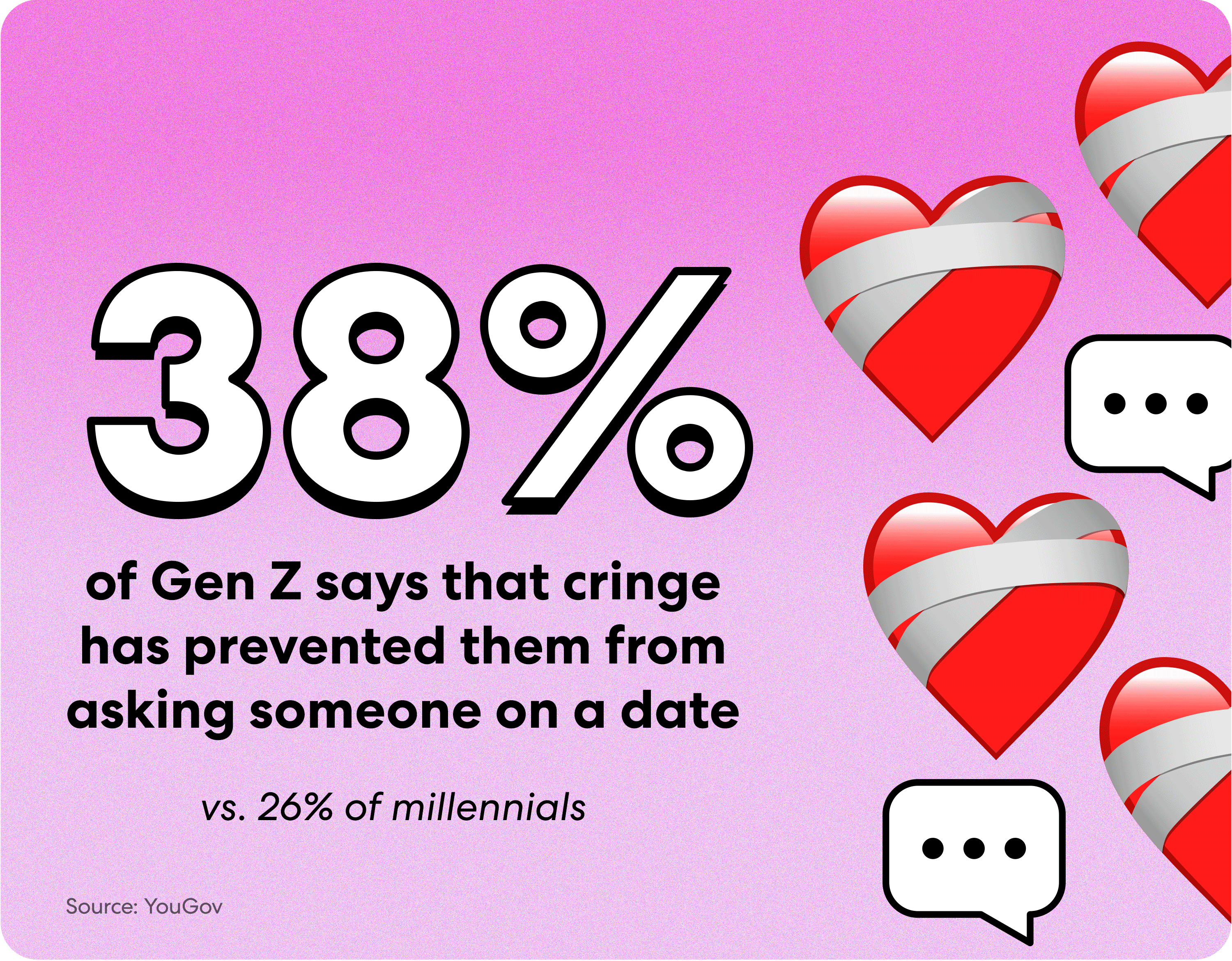
Their fear of cringe is an internal censor that shapes what they say, post, pursue and even feel comfortable wanting. It’s a prison of young people’s own making as they try to take flight as adults. A new Yahoo/YouGov poll demonstrates how this anxiety has shaped their lives in very real ways: More than half of adult Gen Z respondents said that they have avoided expressing themselves freely online for fear of coming across as cringe. It has also seeped into their lives beyond the internet: 55% say fear of cringe has prevented them from opening up to someone emotionally; large shares say that it has held them back romantically and prevented them from pursuing hobbies and seizing professional opportunities.
“I have avoided sharing stuff with friends and family out of fear of coming off as being cringe,” Charlie, a 19-year-old Connecticut resident, tells Yahoo. “What often happened was my own personal passion for the thing died out and I felt like I was weird for ever even liking it.”
This phenomenon is perhaps a natural consequence of how Gen Z came of age: They were the first to grow up entirely online, with technology in their hands from an early age. They’ve adapted to being constantly surveilled and picked apart by ever more punishing versions of the internet than other generations experienced. Who could blame them for their nerves?
Erica Rozmid, a psychologist and clinical assistant professor at UCLA, tells Yahoo that the fear of cringe pervades the lives of many of her young clients, and that they need professional help working through it. Feeling momentarily ashamed because of perceived rejection — which is what cringe is at its core — is normal. What’s not normal is the constant misery of trying to sidestep embarrassment altogether.
Gen Z was once lauded for its desire for authenticity. Inundated by influencers and overly curated content, they wanted to see real emotions, real bodies and real lives. But something fundamental seems to have shifted. Being truly authentic inevitably opens you up to more rejection, Rozmid says. “I don’t know if they are prioritizing authenticity as much as they are prioritizing acceptance,” she adds.
Over the last two months, I spoke with a dozen 18-to-29-year-olds about how the fear of cringe has infiltrated their lives. What I found was young people who are struggling not just to express themselves, but to function in a cultural landscape where the slightest misstep can expose them to widespread mockery. But many also yearn for their freedom from these relentless social codes — they’re ready to embrace their own cringe.
How cringe was forged
Much of what Gen Z finds cringe today, from posting freely online to trying hard at work, is their reaction to what came before them — that is, it’s a backlash to millennial culture.
Millennials began experimenting with the internet and social media as tweens and teens. Much of their online behavior came down to loving things deeply and sharing them openly. Whether it was overly staged pictures of avocado toast on Instagram, a passion for musicals, a propensity to sort themselves into Harry Potter houses or slang terms like “adulting,” the earliest digital natives were unabashedly enthusiastic about their interests and passions. Ultimately, they came to be seen as hopelessly naive. “Everybody makes fun of the trailblazers,” Ana, a 25-year-old in Arizona, says. “There were no established societal norms on the interface yet.” This shows up in the polling: Across every metric, millennials (now 30 to 44) fear cringe far less than Gen Z does.
Mark Beal, an assistant professor of communications at Rutgers University who has written four books about Gen Z, says young people are both consummate consumers and content creators (one poll found that two-thirds consider themselves to be in the latter category). What happens to them online matters just as much as what happens to them IRL. As such, they’re constantly connected to others and can’t escape the feeling of being ceaselessly perceived.
“Every photo and video that is distributed and posted can leave Gen Z feeling cringe as thousands of people are scrutinizing every detail of every piece of content from fashion to facial features,” Beal tells Yahoo. Moreover, you can’t really outrun past versions of yourself anymore. “Unlike older generations who graduated to a new life chapter following high school, Gen Z is bringing with them their social media footprint.”
Powerful social media algorithms, which reward conflict and controversy with clicks, attention and money, have also shaped Gen Z’s conception of cringe. Platforms that were once characterized by follower lists and linear timelines have been replaced by sophisticated feeds that can make even the most vigilant creator (or bystander) the subject of the whole internet’s vitriol.
Wes, a 25-year-old from Massachusetts, recalls that some of the first content he consumed as a teenager was “cringe compilations.” Creators would splice together clips of largely neurodivergent, overweight or LGBTQ people behaving in a socially unacceptable way, inviting viewers to gawk and laugh at their differences. The overall vibe, Wes says, was: “How dare they exist wrongly?”
“Cringe became this weapon wielded against people in the most dangerous time for it to become a concept,” he says. “It creates a lot of fear, especially when you’re a young person.”
The kind of cringe compilations that Wes and his friends encountered as they were just beginning to explore the internet still exist, though many of the forums used to share them have been banned. The definition of cringe has expanded beyond a way to mock marginalized groups online into a way to mock anyone for stepping even slightly outside of social norms.
Platforms like TikTok and X naturally seek a “main character of the day” to assess and argue about — the stepdaughter of a Brazilian soccer player who felt snubbed by a Chappell Roan encounter, a content creator’s search for a particular shirt or a dating influencer whose relationship announcement video series didn’t go over well. Culture quickly moves on, but the public lashings don’t feel good. “Because of social media, we are all public figures or have the chance to be one,” Wes says.
In the content panopticon we live in, you can be a normal, mostly anonymous person one second and a widely hated pseudo-celebrity the next. The consequences extend beyond reputational damage: You can lose your job at any moment for an unexpectedly viral post — it’s happened to restaurant employees, medical staff and teachers.
Many Gen Z-ers have had a brush with brief viral fame, and they don’t look back on it fondly. “Nothing ever really goes away these days … and things can go from a private moment with somebody to having 12 million views on TikTok in three hours now,” Tyler, a 27-year-old living in Georgia, tells Yahoo. “We have to be a lot more careful about what we say and what we do digitally now because it can just spiral so quickly.”
But in this environment, failing to get attention is a failure too. “There are few feelings more humiliating than when you post something on social media and it’s a flop,” Wes says. “It’s like telling a joke at a party and nobody laughs, they just stare at you.”
This puts Gen Z in a state of incessant adolescent anxiety, never really outgrowing the fear of social censure that defines early teenage years. The whole internet feels like an enormous high school cafeteria full of snickering classmates. Tyler notes that he’s typed out and deleted posts more times than he could count. Per our Yahoo/YouGov poll, 55% of 18-to-29-year-olds have done the same.
Read the next two sections about what it’s really like to live under the tyranny of cringe and whether there’s life beyond it HERE ON YAHOO!!
Keep reading Yahoo’s Generation Cringe package!
QUIZ: Gen Z is being held captive by cringe. Are you?
Gen Z’s biggest fear is laughable at first. But it’s quietly wreaking havoc on their lives.
LinkedIn, male thirst traps, text apologies: 17 Gen Z-ers tell us what they find unbearably cringe
If you’re my friend and you want to share this story, here are some links to repost!!
X • Bluesky • Threads • Substack Notes
Relatable. I'm 28 and, unfortunately, grew up on social media. I stopped posting on Facebook several years ago after political arguments started affecting my real-life relationships, and the time I spent on that site felt more and more like a waste of my one wild and precious life. I haven't posted to my IG feed in over a year. All I do on there now is check group chats and dutifully repost work promos to my stories. Similarly, after a brief fling with TikTok around 2020-2021, I realized I just couldn't have a healthy relationship with that platform. It may be boomer behavior, but lately if I want to share something I'll just text a pic to my family.
I just don't feel like sharing moments of my life with the internet anymore. Maybe it's because I already went through the avocado toast phase. It was fun at the time, in a way - I did like connecting with people online over hobbies & interests we share - but I was also SO anxious about how I was perceived.
It's not just the scrutiny/cringe factor (though that is a part of it). The flip side was toxic, too. I've found it really transformative to break away from craving that validation I used to get from likes. I feel a lot healthier and happier away from social media.
& I don't care how Millennial my emoji use might be 😂 If a teenager thinks I'm old, they're right! I'm not 19 anymore and I have ZERO desire to be that young again. I'm happier and more confident than I've ever been. The kids can have their slang - I don't need it. It's a traditional rite of passage to become embarrassing to teenagers, anyway. If we're lucky, we'll spend decades of our lives becoming increasingly more embarrassing - and wise, and comfortable in our own skin.